
Status:
Rest day in preparation for what look to be a fairly busy week, at least for me. Tomorrow is psychotherapy, which has been a bit more tiring this time around for some reason. Wednesday I’m going OUT to a CAFE with a FRIEND, something which hasn’t happened for maybe two years? And then Thursday I’m meeting with a neighbour who also has chronic fatigue, which will be nice, but also, new person, so extra cognitive load. Getting my pacing strategies ready so Friday isn’t an emotional mess.
I’ve followed up on a couple of the heatwave ideas. I checked the vent in the attic roof and it’s substantial enough and should be doing the job, so we’ve left the hatch open for a few days to draw air in from below and it’s definitely cooler up there. Plan is to just leave it open a crack throughout the summer and see what happens, but I’m optimistic it’s going to make a massive difference.
While up in the attic I dug out the hydroponic tent, measured the windows it needs to cover, and it’s a good fit. I’ve cut out a couple of panels and put them to one side to fit some fixtures on another day. I reckon we should be able to stretch one across the main lounge window and suspend the other from the upstairs window without need for ladders.
Big Read:
The no-human future — What is Nick Land’s philosophy of accelerationism really?
Via Patrick Sentiers who provides a good summary of what can be a pretty dense essay at times. I definitely skimmed the middle bit on Kant, Deleuze et al but the top and tail are quite readable.
One of the things you quickly realise if you study western philosophy is that most of the great philosophers who dealt with the human condition were weird little guys, lonely and depressed outcasts beset with neuroses and maladies. Well adjusted people, it seems, do not feel the need for deep introspection.
And this tracks. A couple of decades ago I developed a mild reputation for being able to see how systems worked, particularly in social or community online environments, and in hindsight this was because I struggled with them so got good at mapping them out before engaging. People who don’t struggle just dive in and so have no sense of an overview. Where this fell down was me assuming I then had the ability to see how they could be improved — mapping and building are very much not the same thing.
Nick Land is very much a weird little man with strange ideas, who mapped the world as he perceived it and went on to make some rather shall-we-say bold diagnoses about what needed to happen next. So it’s been fascinating to see him taken up as a major thinker in accelerationist circles. The billionaires of Silicon Valley are building their AI god on the words of this guy? Really?
While I have little time for Land himself, given the worst people in the world are using him as a foundation to wreck our future he’s probably worth looking at. And it turns out his proponents have totally misunderstood him, according to Vincent Lê in this piece. Which, you know, tracks.
Land’s ideas radically diverge from the reigning conceptions of accelerationism today. His original formulation in the 1990s is clearly opposed to its white supremacist vulgarisation: he has zero interest in any violent return to tradition, or indeed in preserving any human populations at all. This vulgarisation selectively takes his notion that accelerating the dynamics of the modern world to breaking point will bring about some revolutionary phase transition. So-called ‘accelerationists’ operating in this mode then take a step backwards. Instead of embracing what Land sees as a phase transition beyond humanity altogether, they envision the revival of conservative human traditions.
It might seem that Land is closer to effective accelerationism’s defence of capitalism. Yet he is hardly a typical Right-wing libertarian who contends that capitalism is good because it generates prosperity and personal freedom. On the contrary, for him, capitalism is ‘good’ precisely because it is alienating, dehumanising and will eventually wipe us out. While the effective accelerationists find an affinity in his rhetorically seductive fervour for techno-capitalism, they tend to overlook the uncomfortable fact that he believes it to be bringing about the exact opposite future that they want.
I mean, who here hasn’t found themselves following a nihilistic preacher towards annihilation?
Reading:
-
Porn star turned late-night TV icon Robin Byrd: ‘Sex is a form of magic’ — Public access cable TV was one of the weirdest glitches in media regulation that could only have come from America. People talk about it as a precursor to the anarchy of early-YouTube but it really just showed that the real world was much stranger than the people running the commercialised world wanted us to imagine, and the regulators forced them to do it. Imagine if the Daily Mail was forced to fund and distribute to newsagents thousands of underground zines from weirdos like us. What a world that would be.
-
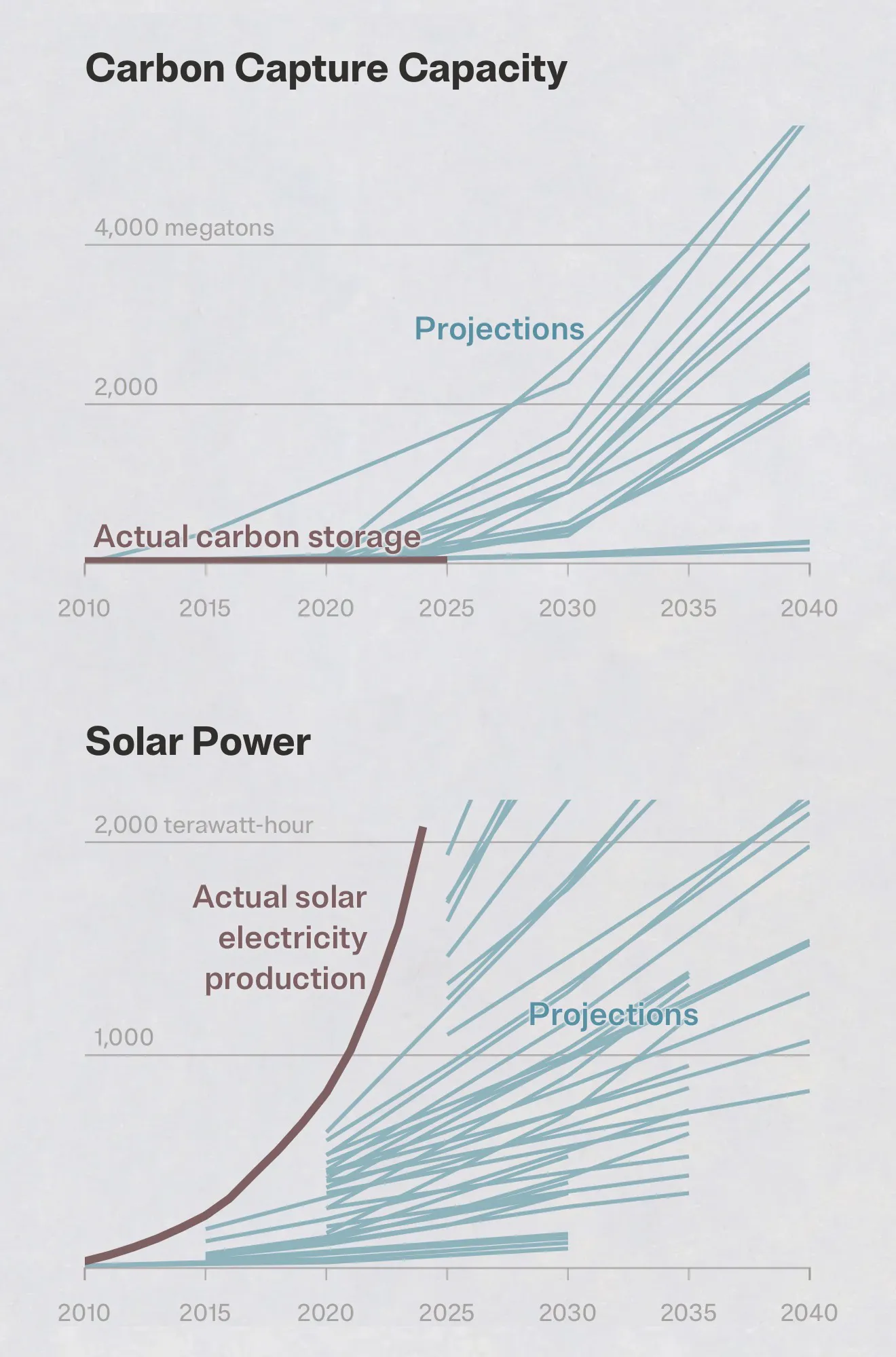
False Promises - Why carbon capture and storage won’t fix our climate crisis. — One of those tedious animated essays that hijhacks your scrolling for no good reason, but worth it for the graph of actual carbon capture & storage vs industry predictions alongside how we’re doing with solar. There are a few technological climate fixes that if you squint are at least feasible in an ideal world. This is definitely not one of them. Pure snake-oil from vested oil & gas interests.
-
Andy Burnham vows to set up No 10 North as ‘nerve centre of rewired Britain’ — As always it’s all in the details. He’s not moving the PM’s office to Manchester, just opening a new department there. But it’s still a big shift and contains some ambitious ideas on changing the culture of government that makes one raise a cautiously optimistic eyebrow.
-
Enduring the heat wave in Germany — Loads of tips and explanations of why they may or may not work, some of which I hadn’t seen before.
-
Red Hand Files #370 — On growing up, essentially. “Over time, that fiery intensity ebbed away, and I realised that the past wasn’t something to discard but to respect."
-
Interesting thread about the reality of running a commercial email or VPN service — Guy did some research and decided it’s not worth it.
-
Promises made, promises kept: The Lincoln Memorial Reflecting Pool absolutely looks like shit now — Trump’s gift to writers that just keeps giving.